AI Affiliate Marketing in 2026: What Actually Works for Traffic, Trust, and Conversions
Most affiliate publishers are using AI the wrong way. They are using it to publish faster instead of deciding better. The result is more content, weaker trust, flatter recommendations, and lower conversion quality. The publishers winning in 2026 use AI to improve systems, not fake expertise.

Quick answer
AI is good for affiliate marketing only when it improves research, structure, internal linking, buyer guidance, and refresh velocity without weakening trust. If it replaces testing, expertise, recommendation quality, or editorial judgment, it lowers the value of the page even if the page looks polished.
Why AI matters more for affiliate marketing now
The old game was publish enough content to win more queries. The new game is publish pages that deserve to be trusted, extracted, cited, and clicked. That shift is why AI matters more now than it did two years ago.
Search in 2026 is not just organic rankings. It is AI Overviews, answer extraction, comparison-layer visibility, zero-click pressure, and generative search behavior that rewrites how discovery works. If your page is vague, bloated, or generic, AI systems will flatten it. If it is clear, structured, and trustworthy, they are more likely to extract it cleanly.
This is also why serious publishers are tightening their content strategy for affiliate topic clusters and paying closer attention to how AI is changing SEO strategy itself. The goal is not more output. The goal is more ranking durability and more monetizable trust.
What actually wins with AI affiliate marketing in 2026
The pages that win are commercially sharper, structurally clearer, and easier to trust than the average competitor. AI helps when it makes those differences easier to produce consistently.
What wins now is not “AI content.” What wins is decision-quality content: pages that answer the core question quickly, map the main tradeoffs, guide the next step clearly, and connect informational traffic to commercial intent without sounding manipulative.
If the page makes the reader think “this helped me decide,” you are on the right path. If it makes the reader think “this sounds like everything else,” you are not.
The best framework for using AI in affiliate marketing
The most reliable model is Research -> Structure -> Verify -> Convert. It is simple enough to repeat and strong enough to protect quality.
- Research: use AI to cluster keywords, extract entities, read SERP patterns, and mine objections that matter.
- Structure: use AI to improve outlines, comparison criteria, FAQs, subtopic coverage, and contextual internal links.
- Verify: let humans validate facts, offers, positioning, tradeoffs, pricing, and final recommendations.
- Convert: use AI to support CTA testing, buyer-fit summaries, and refresh cycles tied to actual performance.
This works best when paired with real affiliate conversion-rate optimization, not just copy tweaks. Conversion happens when the recommendation feels credible, specific, and aligned with user intent.
Best use cases by affiliate page type
Product roundups
AI is excellent for standardizing evaluation criteria and helping you identify repeated buying questions. But the final order and recommendation logic should still come from human judgment.
Single-product reviews
Use AI to structure the review and strengthen coverage. Do not use it to imply experience you do not have or flatten meaningful tradeoffs into vague praise.
Versus pages
AI can accelerate comparison frameworks, but the real value is in a sharp conclusion that tells different buyer types what to choose and why.
Informational content
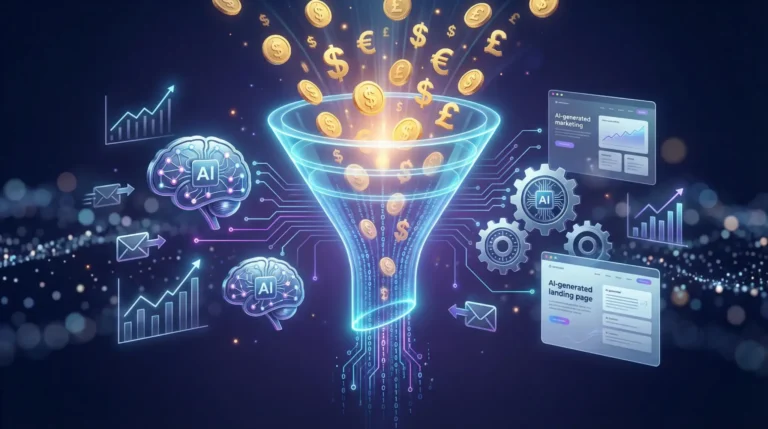
This is where AI often creates the most leverage because it improves query coverage, question mining, and internal pathways into commercial pages like high-upside affiliate products to promote and AI-powered affiliate funnel systems.
Decision rule: the closer the page is to a buying decision, the less you should trust AI alone with the recommendation layer.
How AI changes SEO, AEO, and GEO
SEO rewards relevance and structure. AEO rewards clear answers. GEO rewards credible synthesis that can be safely summarized. The strongest affiliate pages are built for all three.
The practical test is simple: can a human skim this page and trust it, and can an AI system extract the main value without distorting it? If yes, you are closer to the mark.

Common mistakes that hurt rankings and commissions
- publishing thin AI-assisted pages that have no differentiated value
- trusting unsupported claims, vague comparisons, or hallucinated product details
- copying competitor structures without improving decision quality
- letting AI soften strong recommendations into generic safe language
- ignoring disclosures, trust signals, and commercial clarity
- optimizing for traffic while neglecting the conversion path
Best AI tools for affiliate marketers
The best tool depends on the bottleneck:
- ChatGPT: outlines, early drafts, FAQ support, rewrite ideas, internal-link suggestions
- Claude: restructuring, long-form editing, sharper synthesis, cleaner editorial passes
- Perplexity: source discovery and research acceleration
- Search Console + GA4: performance truth and page-level feedback
- Ahrefs / Semrush: keyword clusters, overlap analysis, competitor mapping
Decision rule: do not ask which tool is best in general. Ask which tool fixes your current bottleneck fastest.
How to measure whether AI is helping
If AI is helping, the workflow should produce better business outcomes, not just more drafts.
- better ranking coverage across your target cluster
- higher CTR from stronger framing and structure
- better engagement from clearer design and faster comprehension
- higher conversion rates from more credible buyer guidance
- faster refresh cycles without a quality drop
- stronger internal-link coherence across related pages
Takeaway: output speed is not the KPI. Better pages are the KPI.
FAQ
Can AI-generated affiliate content rank in Google?
Yes, but only when the final page is useful, credible, and better than the competing alternatives. Generic AI filler is not a durable ranking strategy.
Should I use AI to write affiliate reviews?
Use AI to support the workflow, not to own the recommendation. Reviews still need human judgment, fact-checking, and credible buyer guidance.
Can AI improve affiliate conversions, not just traffic?
Yes. It can improve objection handling, CTA clarity, buyer-fit messaging, and supporting pathways to commercial pages, but those gains still need measurement.
Will AI replace affiliate marketers?
No. It will replace weak workflows faster than it replaces strong judgment.
Final verdict
AI is good for affiliate marketing when it improves the process more than it weakens the recommendation. That is the clean standard.
The affiliate publishers who will win in 2026 are the ones who use AI to sharpen research, structure, internal links, refreshes, and conversion support while protecting judgment, trust, and recommendation quality at the human layer.
Helpful next reads
- Content strategy for building stronger affiliate topic clusters
- How AI is changing SEO and organic visibility
- How to increase affiliate marketing conversion rates
- Best affiliate products to promote for stronger monetization
- AI affiliate funnels that support scaling and automation
- Affiliate marketing SEO strategies that still work
References
If you want to go deeper, these are the most useful external resources to understand how AI is affecting search visibility, content quality, measurement, and trustworthy publishing.
- Google Search Central: Creating helpful, reliable, people-first content
- Google Search Central: Intro to structured data
- Google SEO Starter Guide
- Google guidance on AI-generated content and Search
- Google blog: generative AI in Search
- Think with Google: The messy middle of purchase decisions
- Google Analytics 4: Measure content and conversion paths
- Nielsen Norman Group: How users read on the web

I’m Alexios Papaioannou, an experienced affiliate marketer and content creator. With a decade of expertise, I excel in crafting engaging blog posts to boost your brand. My love for running fuels my creativity. Let’s create exceptional content together!