Amazon Associates Guide: Approval, Compliance, and SEO Strategy
Amazon Associates Guide: Approval, Compliance, and SEO Strategy
A practical Amazon Associates guide covering approval requirements, compliance realities, content formats, alternatives, and SEO strategy for affiliate publishers.
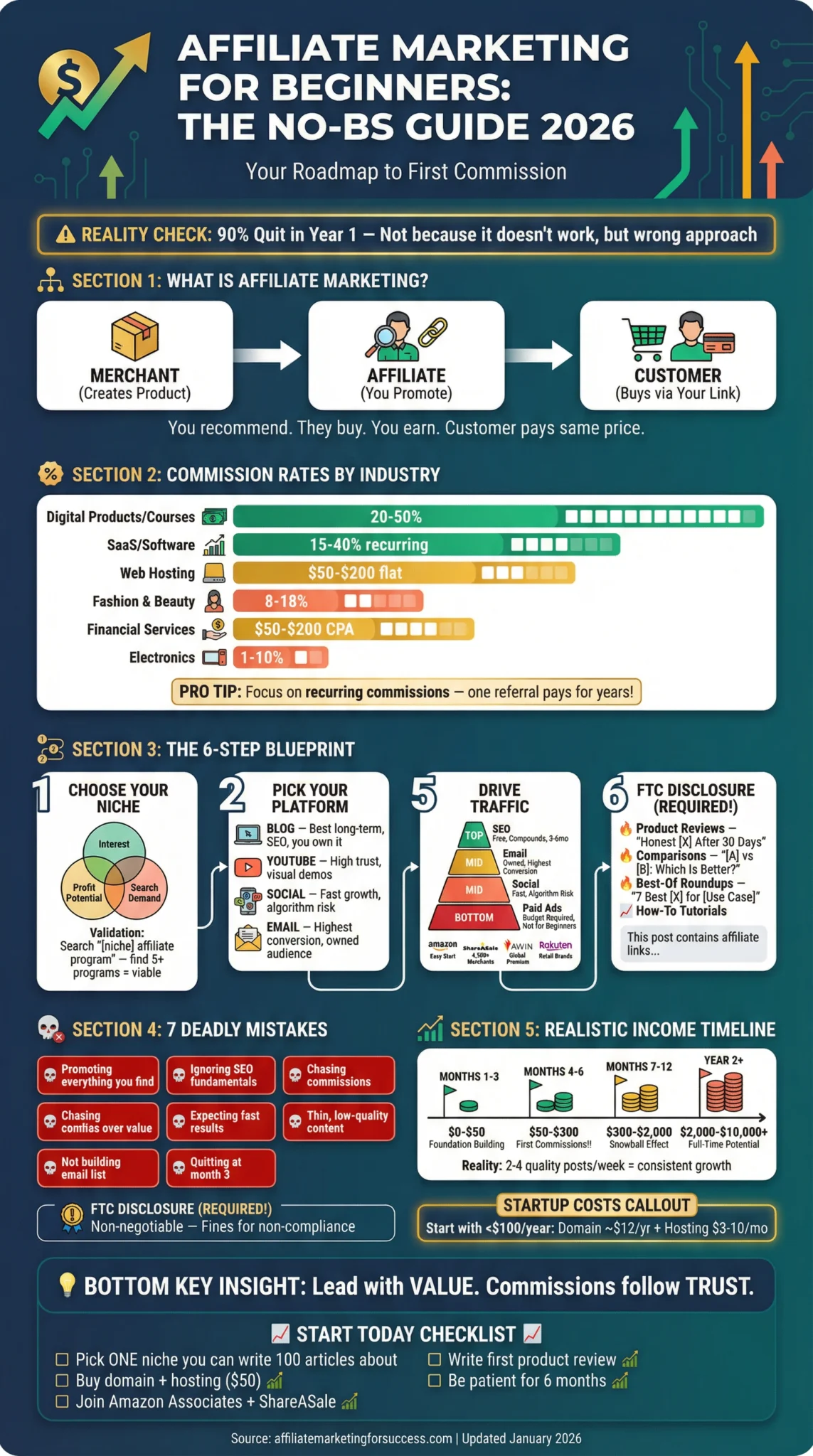
The safest way to improve Amazon Associates compliance results is to match the page to a real buyer problem, verify claims before publishing, compare alternatives honestly, and route readers to the next useful action. Amazon Associates is often the easiest affiliate program for beginners because Amazon is familiar to shoppers and covers a huge range of products. It is not always the highest-paying option, so use it for product-led content, comparison pages, and buyer guides while also building relationships with higher-commission networks and direct programs.
- Beginners launching their first niche or product review site.
- Hobby blogs wanting to recommend physical products easily.
- Growing publishers needing to improve SEO, compliance, and conversions.
- Affiliate marketers wanting to balance low-ticket Amazon offers with high-ticket SaaS solutions.
- Publishers looking for “get rich quick” schemes or guaranteed earnings.
- Marketers planning to copy-paste Amazon product details blindly.
- Sites attempting to use unverified product reviews or fake buyer testimonials.
- Those unwilling to follow strict compliance and disclosure rules.
Amazon Associates Approval Checklist for New Affiliate Sites
Getting accepted into the Amazon affiliate ecosystem requires strict compliance. To satisfy the Amazon Associates approval requirements, your website must be public, active, and contain original content. Below is the checklist to ensure you do not get banned during your application review.
- Original Content: Your site must have at least 10 active, high-quality, original articles. Amazon will reject thin, scraped, or placeholder content.
- Amazon Affiliate 3 Sales in 180 Days: You must drive 3 qualifying purchases within 180 days of applying to secure full approval.
- Amazon Affiliate Disclosure Examples: Clearly state your association on every page. Use: “As an Amazon Associate I earn from qualifying purchases.”
- Amazon Affiliate Links in Blog Posts Rules: Do not use Amazon links in emails, PDFs, or social media unless explicitly approved. Link only from public, indexable blog posts.
How to Get Your First 3 Amazon Associates Sales in 180 Days
Driving initial traffic is the hardest part for new blogs. To secure full approval, you must know how to get 3 sales Amazon Associates in 180 days. If you fail to meet this threshold, your application will be rejected, though you can reapply later. The fastest way to hit this milestone without relying on friends or family is to write highly focused product reviews and setup tutorials targeting low-competition search queries.
Amazon Affiliate Links in Blog Posts Rules
To avoid getting banned, you must follow the strict Amazon affiliate links in blog posts rules. Placing links in unapproved formats can lead to immediate termination during your application review.
| Link Placement Type | Allowed Practices | Risky / Banned Practices (Avoid) |
|---|---|---|
| Public Blog Posts | Text links, product cards, and image links pointing to Amazon. | Do not mask or cloak links. Avoid link shorteners (like bit.ly). Only use standard Amazon amzn.to short URLs. |
| Offline Materials | None. Keep all links on your indexable web pages. | Do not place affiliate links in PDFs, ebooks, or email newsletters. |
| Pricing Displays | Use dynamic API-fed pricing or avoid listing specific prices. | Do not hardcode specific prices manually (e.g., “Buy for $19.99”). |
Swipe left/right to view table.
Can You Mention Amazon Prices in Blog Posts?
A common question among new publishers is: can you mention Amazon prices in blog posts? The short answer is: No, unless you are using the Product Advertising API. Amazon’s pricing is highly volatile, and displaying outdated static prices violates their operating agreement. Instead of showing exact dollar amounts, use relative pricing indicators (e.g., “$”, “$$”, “$$$”) or direct calls to action such as “Check current price on Amazon.”
Use these Amazon affiliate content ideas to structure your product review pages. Ensure your links are integrated naturally inside helpful tutorials rather than generic reviews.
Decision Table: When to Use Amazon vs. Other Programs
Before promoting any products, you must evaluate whether Amazon Associates fits your content and traffic level. Use this decision matrix to plan your monetization path.
| Decision Factor | Choose Amazon When | Risk to Check | Best Next Action |
|---|---|---|---|
| Reader Problem | The audience needs physical products, books, gear, or consumer goods. | Problem is too broad or products are low-ticket. | Focus on specific, commercial user intents and setups. |
| Commercial Fit | Products solve the problem naturally and are widely available. | Low commissions or lack of recurring payouts. | Compare alternatives and introduce direct brand affiliates. |
| Trust Burden | Claims can be verified easily through specifications and manuals. | Fake user reviews or outdated prices. | Mark and verify claims; avoid hardcoded static prices. |
| Topical Runway | You can build product roundups, comparisons, and setup guides. | Single, isolated article with no cluster support. | Build a content cluster containing reviews and setup tutorials. |
Swipe left/right to view table.
What Amazon Associates Is Good For
Amazon Associates is a practical starting point for affiliate marketers because it lets publishers recommend products from one of the world’s most familiar shopping ecosystems. A beginner can build review pages, product comparisons, gift guides, buying guides, and “best for” roundups without needing to negotiate with each merchant individually.
The trade-off is commission economics. Amazon is convenient, but it is rarely the highest-paying affiliate option. Commission categories vary, policies change, and your content must follow Amazon’s operating rules carefully. The best strategy is to use Amazon where it gives readers the broadest product choice and then add higher-value programs where they genuinely serve the reader better.
How to Get Approved and Stay Compliant
Amazon approval is not only a formality. You need a real publishing property, clear content, and compliant promotion practices. Your site should have useful posts, an accessible privacy policy, a visible affiliate disclosure, and a clear niche before you apply.
The most important compliance rule is simple: do not hide the fact that you earn from qualifying purchases. Place a clear disclosure before or near affiliate links, not buried in a footer. You should also avoid copying Amazon reviews, misrepresenting prices, using outdated pricing claims, or making unsupported product claims.
Amazon policies and commission rates can change. Before publishing, verify current rules on the official operating agreement and commission statement. Keep in mind that static pricing displays violate Amazon’s terms unless generated dynamically via their API.
The Best Content Formats for Amazon Affiliate SEO
Different search intents require different content structures. Below are the five formats that perform best for Amazon SEO and answer engine extraction.
| Format | Best Use Case | Critical Elements to Include |
|---|---|---|
| Product Roundup | Broad commercial intent (e.g. “Best hiking boots”) | Comparison table, segmentation (“best budget”), pros/cons list. |
| Single Product Review | High intent search (e.g. “Nike Pegasus 40 review”) | Original photos, setup instructions, hands-on test data. |
| Product Comparison | Decision stage search (e.g. “Nike Pegasus vs. Brooks Ghost”) | Side-by-side spec table, key differences, final recommendation. |
| Buying Guide | Research intent (e.g. “How to choose a golf club”) | Selection criteria list, common mistakes, fit guide. |
| Problem-Solution Guide | Informational query (e.g. “How to clean a rusty grill”) | Step-by-step tutorial, recommended cleaning tools (affiliate links). |
Swipe left/right to view table.
The strongest Amazon pages do not simply list products. They teach the reader how to choose. That educational layer improves trust, supports AEO, and gives your recommendations more context.
How to Build an Amazon Content Cluster
A single Amazon article is rarely enough to build topical authority. Instead, build a cluster around the buyer journey. Start with an evergreen buying guide, then publish supporting product reviews, comparisons, “best for” pages, maintenance guides, and alternatives.
For example, if your niche is DIY woodworking tools, your cluster might include a hub guide on setting up a home workshop, supported by comparisons of tables saws, single-product drills reviews, safety equipment guides, and project tutorials. Each page should link back to the hub and sideways to the most relevant decision page.
Use descriptive anchors. “Review of the DEWALT 10-Inch Table Saw” is more useful and natural than “read more”. Internal links should make the reader’s next decision easier.
When Amazon Is Not Enough: Diversifying Your Portfolio
Amazon is convenient, but you should not let it define your entire monetization strategy. If your audience buys software, hosting, courses, business tools, email platforms, or B2B services, you may earn much more by using direct programs or affiliate networks.
Compare Amazon against SaaS programs, direct brand partnerships, and established affiliate networks. The best affiliate sites usually mix monetization sources so they are not exposed to one platform’s commission changes. To diversify, evaluate programs using our detailed guides on the Best Affiliate Programs for Beginners, the ShareASale Review, and the Impact Affiliate Network Review.
Practical Implementation Checklist
Use this guide as an operating checklist, not just as a reading resource. The strongest results come when the advice is translated into visible page improvements, measurable decisions, and repeatable editorial standards.
- Clarify the primary search intent before editing. Satisfy one main query first, then answer secondary questions.
- Keep the opening quick answer concise. A reader should understand the conclusion before they reach the first heading.
- Use core entities naturally throughout the content: Amazon Associates, affiliate disclosure, commission income, operating agreement, product reviews, buyer guides, comparison content, and affiliate links.
- Add a comparison table, decision framework, checklist, or workflow wherever the reader needs to choose between options.
- Include visible evidence for claims that affect money, trust, compliance, performance, or product selection.
- Place affiliate disclosures before or near commercial recommendations, especially on review, comparison, and “best” pages.
- Validate that the title tag, H1, meta description, canonical URL, schema, and visible content all describe the same page intent.
Implementation Roadmap: 8 Steps to Scale
Use this roadmap after publishing your guide. It turns the rewritten article from attractive content into an operating asset that can earn traffic, links, engagement, and AI citations over time.
- Step 1: Verify the official program terms, including approval criteria, payout rules, commission exclusions, and promotional restrictions.
- Step 2: Identify the exact reader segment the offer helps and write that segment into the recommendation.
- Step 3: Add comparison criteria that go beyond commission rate: conversion path, refund risk, support, content potential, and audience trust.
- Step 4: Create a cluster around the offer: reviews, alternatives, tutorials, comparisons, and FAQ.
- Step 5: Add a visible affiliate disclosure before the first commercial recommendation.
- Step 6: Add screenshots or editorial notes showing how the program works, where possible.
- Step 7: Link to adjacent program reviews and SEO guides to keep readers inside the topic cluster.
- Step 8: Schedule a quarterly refresh for rates, terms, screenshots, and merchant availability.
Watch: Affiliate Strategy Context
Affiliate Resource Shortcuts
Disclosure: Some links are affiliate links. We may earn a commission if you buy through them, at no extra cost to you. Verify price, availability, reviews, and suitability on Amazon before purchasing.
Research shortcuts, official guidelines, and training materials from Amazon.
Legal and practical guides to complying with FTC affiliate disclosures.
Niche site planning notebooks and physical logs for tracking product reviews.
Frequently Asked Questions
Where should I place my Amazon affiliate disclosure?
According to FTC regulations and the Amazon Associates approval checklist for new blogs, you must place your affiliate disclosure above the fold, before any product recommendations or affiliate links. Review the Amazon affiliate disclosure examples for blog posts (e.g., “As an Amazon Associate I earn from qualifying purchases”) and ensure it is clearly visible to readers immediately upon landing on the page.
Is Amazon Associates good for beginners?
Yes. It is beginner-friendly because Amazon has an enormous product catalog and strong shopper familiarity. The downside is that commission rates vary and may be lower than direct programs.
Do I need a website to join Amazon Associates?
You need an approved publishing property such as a website, app, or eligible social presence. A content site with clear niche articles and disclosures is usually the strongest starting point.
Can I mention Amazon prices in my content?
Be careful. Prices can change frequently. Use official tools or avoid static price claims unless you have a compliant way to keep them current.
Should I use only Amazon links?
No. Use Amazon when it is best for the reader, but compare it with direct programs and networks that may offer better commissions or stronger niche fit.
How do I get approved for Amazon Associates?
To get full approval, you must create a qualifying site or social media presence and generate three qualifying sales within 180 days. Your site must have original content and a clear affiliate disclosure.
Final Verdict
The strongest version of this page is not the longest version. It is the version that answers the search intent clearly, proves its recommendations, connects readers to the right next resource, and stays accurate as products, search behavior, and AI answer surfaces change.
After publishing, measure performance by query impressions, click-through rate, engaged time, affiliate clicks, assisted conversions, scroll depth, and whether readers continue into the linked topic cluster. That is how this article becomes a durable asset rather than another isolated blog post.
Affiliate Marketing Roadmap →
Learn how to build a profitable affiliate site from scratch with our step-by-step roadmap.
Best WordPress Hosting →
Compare the fastest, most reliable hosting services tailored for affiliate blogs.
This section was reviewed in June 2026 for SEO/GEO/AEO structure, affiliate disclosure safety, claim risk, internal links, and answer-engine extractability. Claims about prices, commissions, rankings, traffic, ratings, or product features should be verified against the original provider or platform before publication.

Alexios contributes to Affiliate Marketing for Success with a focus on affiliate SEO, monetization strategy, and practical publishing systems. For full editorial background and site standards, see the About Alexios page and editorial policy.