
Affiliate Marketing for Beginners: 2026 Step-by-Step Guide
Quick Answer
Affiliate Marketing for Beginners: The No-BS Guide to Your First Commission (2026): prioritize one growth lever per week, measure conversion impact, and expand only proven winners.
Related resources: Success Blueprint · ROI Benchmarks · Semrush Review · Affiliate Disclosure

This page may include affiliate links. We may earn a commission at no extra cost to you.
Last reviewed: 2026-02-20.
The Complete Roadmap
90% of new affiliate marketers quit within their first year. Not because affiliate marketing doesn’t work—but because they’re following outdated advice that was never designed to work. This guide is different.
⚡
Quick Verdict: Is Affiliate Marketing Worth It in 2026?
Bottom Line: Affiliate marketing is one of the lowest-barrier, highest-potential online business models. Commission rates typically range from 5-30% depending on industry, with digital products offering 20-50% commissions. You don’t need a product, inventory, or customer service team. You need a niche, a platform, and the patience to build trust with an audience.
✓ Start If:
- You enjoy creating content (blogs, videos, social)
- You’re willing to invest 6-12 months before significant income
- You want location-independent, scalable income
✗ Skip If:
- You need money this month
- You’re not willing to learn SEO or audience-building
- You hate writing, filming, or creating consistently
📑 What You’ll Learn
- What affiliate marketing actually is (no jargon)
- How commissions and payouts work
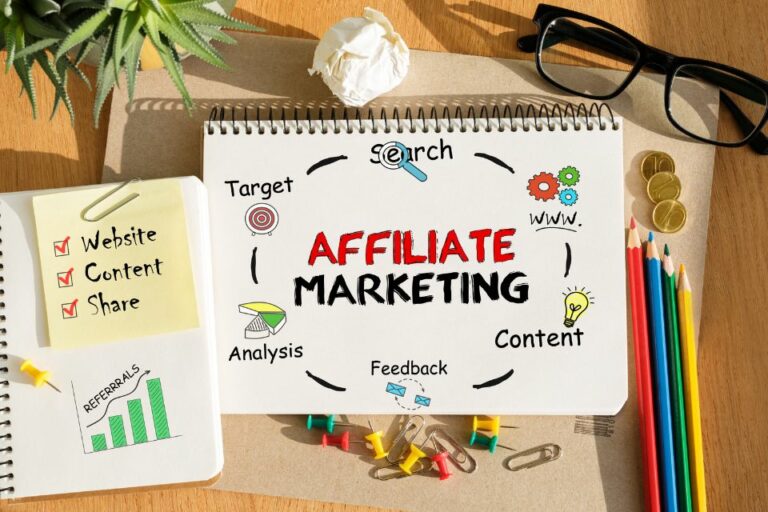
- The 6-step blueprint to your first commission
- Best affiliate networks and programs for 2026
- Common mistakes that kill affiliate sites
- Real commission rates by industry
What Is Affiliate Marketing? (The 30-Second Explanation)
Affiliate marketing is a performance-based business model where you earn commissions by promoting other companies’ products. You don’t create products. You don’t handle shipping. You don’t deal with customer support. You recommend—and when someone buys through your unique tracking link, you get paid.
The 3 Players in Every Affiliate Transaction:
🏢
The Merchant
Creates the product and pays commissions (Amazon, Shopify, software companies)
📢
The Affiliate
That’s you—promotes products and earns commissions on sales
🛒
The Customer
Clicks your link, buys the product (pays the same price either way)
Real Example: You write a blog post reviewing the best email marketing tools. A reader clicks your link to ConvertKit, signs up for a paid plan, and you earn a commission—typically 30% recurring for software products. That reader pays the exact same price they would have paid without your link.
How Affiliate Commissions Actually Work
Not all affiliate programs are created equal. Commission structures vary wildly—and understanding this is the difference between making $50/month and $5,000/month for the same amount of work.
💡 Pro Tip: Variable commission rates in 2026 averaged 7.3%—a 5% increase from 2026. The affiliate industry is growing, and brands are paying more for quality traffic. Focus on recurring commission programs when possible—one referral can pay you monthly for years.

The 6-Step Blueprint to Your First Affiliate Commission
Stop overthinking. Here’s the exact path from zero to earning. Follow these steps in order—skipping ahead is why most beginners fail.
1
Choose Your Niche (And Validate It)
Your niche determines everything—the products you promote, the content you create, and ultimately how much you earn. The sweet spot? An intersection of three things:
🎯
Your Interest
Can you write 100+ articles?
💰
Profit Potential
Are there products to promote?
🔍
Search Demand
Are people searching for this?
Validation Test: Search “[your niche] + affiliate program” on Google. If you find at least 5 relevant programs with decent commissions, your niche is viable.
2
Choose Your Platform
Where will you build your audience? Pick ONE primary platform to start—you can expand later. Here’s the honest breakdown:
| Blog/Website | Best for: SEO, evergreen content, detailed reviews | ⬆ Highest long-term income potential |
| YouTube | Best for: Product demos, tutorials, reviews | ⬆ High trust, visual products |
| Instagram/TikTok | Best for: Lifestyle, fashion, visual niches | → Fast growth, algorithm-dependent |
| Email Newsletter | Best for: Building owned audience, direct promotions | ⬆ Highest conversion rates |
My recommendation: Start with a blog. It’s the most durable asset you can build—you own it, it ranks in search engines 24/7, and it compounds over time.
3
Join Affiliate Programs & Networks
Two options: join individual brand programs directly, or use affiliate networks that aggregate thousands of programs in one dashboard.
Top Affiliate Networks for Beginners:
Amazon Associates
Easiest to start, millions of products, 1-10% commissions
ShareASale
4,500+ merchants, easy approval, diverse niches
Awin
Global network, premium brands, reliable payments
Impact
Enterprise brands, advanced tracking, direct partnerships
ClickBank
Digital products, high commissions (up to 75%), instant approval
Rakuten Advertising
Major retail brands, strong in fashion/lifestyle
4
Create Valuable Content (That Actually Converts)
Content is your leverage. But not all content converts equally. Focus on these high-intent content types first:
🎯 Product Reviews
“[Product Name] Review: Honest Take After 30 Days”
Highest conversion—readers are ready to buy
📊 Comparison Posts
“[Product A] vs [Product B]: Which Is Better For You?”
Captures undecided buyers at decision point
🏆 Best-Of Roundups
“7 Best [Products] for [Specific Use Case] in 2026”
Multiple affiliate opportunities per post
📚 How-To Tutorials
“How to [Achieve Goal] Using [Product/Tool]”
Builds trust, natural product integration
5
Drive Traffic to Your Content
No traffic = no commissions. Period. Here are your traffic sources ranked by sustainability and conversion potential:
BEST
SEO (Search Engine Optimization)
Free, compounds over time, targets buyers actively searching. Takes 3-6 months to see results.
GREAT
Email Marketing
You own the audience. Highest conversion rates. Build from day one.
GOOD
Social Media
Fast reach, algorithm-dependent. Use to drive traffic to your owned platform.
RISKY
Paid Ads
Can work, but requires budget and testing. Not recommended for beginners.
6
Follow FTC Disclosure Rules (Non-Negotiable)
This isn’t optional. The FTC requires clear disclosure of affiliate relationships. Failure to comply can result in fines and program termination.
Required Disclosure Example:
Place this at the top of posts, near affiliate links, and in your site footer/disclosure page.
7 Mistakes That Kill Affiliate Sites (Avoid These)
✗
Promoting Everything
Recommending products you haven’t researched destroys trust. Only promote what you’d genuinely recommend to a friend.
✗
Ignoring SEO Fundamentals
Writing content nobody searches for means zero organic traffic. Do keyword research before every post.
✗
Chasing Commissions Over Value
Readers detect sales-first content instantly. Lead with value; commissions follow trust.
✗
Expecting Fast Results
Most affiliates see meaningful income at 6-12 months. Quitting at month 3 means you wasted months 1-3.
✗
Thin, Low-Quality Content
500-word posts with rehashed info don’t rank or convert. Go deeper than competitors.
✗
Not Building an Email List
Algorithm changes can kill your traffic overnight. Email is the only audience you truly own.
Realistic Income Timeline: What to Actually Expect
Let’s kill the “get rich quick” fantasy. Here’s what realistic progress looks like for a beginner who consistently publishes quality content:
Reality Check: These numbers assume consistent effort—2-4 quality posts per week, active promotion, and continuous learning. Part-time effort produces part-time results. There are no shortcuts, but the compounding effect rewards consistency.
❓ Frequently Asked Questions
📚 Sources & Further Reading
Official resources and additional guides:
- FTC Disclosure Guidelines for Affiliates
Official U.S. Federal Trade Commission requirements - Amazon Associates Program
World’s largest affiliate program—beginner-friendly starting point - ShareASale Affiliate Network
4,500+ merchant programs across all niches - Awin Global Affiliate Network
Premium brand partnerships with reliable tracking and payments
Written By
Alexios Papaioannou
Founder of Affiliate Marketing For Success. Helping beginners build sustainable affiliate income through practical, no-BS guidance.
Last Updated: January 13, 2026
Our Editorial Standards:
- No paid placements or rankings
- Commission statistics verified against industry sources
- All affiliate relationships clearly disclosed
- Content updated regularly for accuracy
Affiliate Disclosure: This page contains affiliate links. If you click through and make a purchase, we may receive a commission at no additional cost to you. We only recommend products and services we believe will add value to our readers. This helps support the site and allows us to continue creating free content.
Affiliate Marketing FAQ
How much money do I need to start affiliate marketing?
Do I need a website for affiliate marketing?

Alexios Papaioannou is the founder and lead editor of Affiliate Marketing for Success. He focuses on affiliate marketing systems, SEO, content strategy, monetization design, and the impact of AI-driven search on publishers. Editorial background, disclosure standards, and correction policy are documented on the site’s About Alexios and Editorial Policy pages.