Pictory AI Review: Best Script-to-Video Tool? (2026)
Updated July 2026 · Hands-on Testing · Expert Review
Quick Answer: Yes, Pictory AI is highly worth it for affiliate publishers who need to scale written content into faceted B-roll and captioned explainer videos in minutes. It acts as an operational acceleration layer for faceless channels, social media hooks, and blog repurposing. However, it does not replace traditional editors (like Premiere or Descript) if you need absolute frame-by-frame timeline control, advanced sound staging, or customized brand cinematography.
Who This Is For
- Affiliate Niche Bloggers: Publishers looking to turn articles into video overlays to boost on-page dwell times and capture double SERP rankings in Google Video carousels.
- Faceless Creator Channels: Content builders who need rapid text-to-speech rendering, stock asset stitching, and auto-captioning for TikTok, Reels, and YouTube Shorts.
- Content Marketers: Teams wishing to turn long webinars or Zoom calls into highly shareable, captioned micro-clips by editing raw text scripts.
Who It Is Avoided By
- Cinematic Directors: Creators who require bespoke camera movements, custom color correction, and original shot layouts that cannot rely on stock libraries.
- Frame-Level Editors: Professionals needing complex multi-layered tracking, audio leveling, and precise timeline editing found in Premiere or DaVinci Resolve.
- Lazy Auto-Publishers: Marketers who expect completely hands-off video generation without reviewing caption spellings, verifying visual context, or inserting FTC disclosures.
What is Pictory AI? (Core Definition)
Pictory AI is a cloud-based, generative artificial intelligence video platform that translates raw text files, written scripts, and live blog URLs into fully synchronized, captioned video drafts. The software utilizes Natural Language Processing (NLP) to analyze your inputs, detect key semantic concepts, and map them to relevant stock video B-roll clips from its massive built-in library of over 10 million licensed Storyblocks and Getty Images assets.
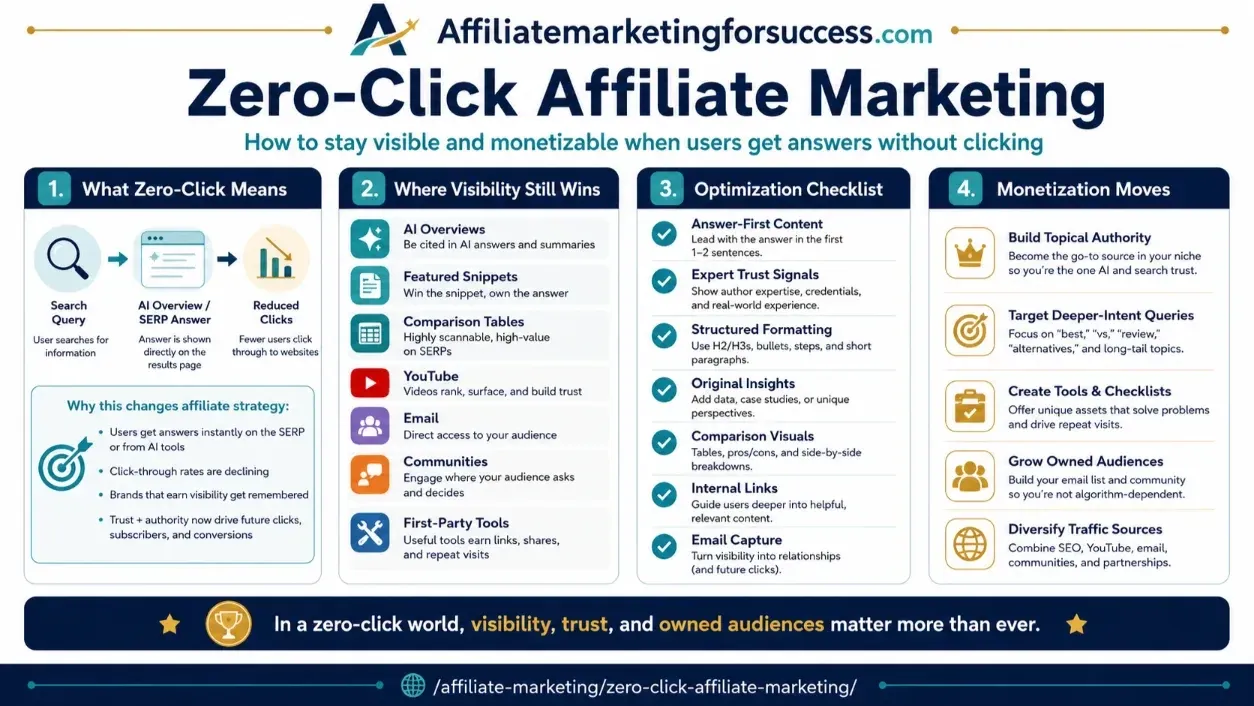
Instead of manual timeline clipping, Pictory structures video production around your script’s text blocks. It automatically overlays text captions, generates realistic synthetic voiceovers (via direct ElevenLabs integrations), and applies transitions. For affiliate marketers, Pictory provides a crucial acceleration mechanism to build multi-format content stacks. This directly helps address the challenges of the “zero-click” search landscape by turning single written reviews into rich visual assets that capture searcher interest and rank on multiple search platforms.
Pictory AI vs. Alternative Creator Workflows
To establish where Pictory fits inside your operational stack, you must understand how it compares to alternative workflows. There is no single “best” tool; rather, the choice depends on your starting asset and desired output shape:
| Tool Name | Core Workflow Shape | Best Use Case | Primary Operational Limit |
|---|---|---|---|
| Pictory.ai | Text-to-Video and Blog URL scraping with automated B-roll asset mapping and templates. | Faceless product reviews, rapid script repurposing, and short explainer drafts. | Stock B-roll can feel generic unless you manually replace and customize assets. |
| Descript | Transcript-based editing where deleting spoken text cuts the video/audio timeline directly. | Talking-head videos, screen recordings, podcasts, and cloned voice matching. | Not built for parsing bulk written text files to construct B-roll slideshows. |
| Canva | Visual layout editing with drag-and-drop design templates and static graphical overlays. | Social media banners, interactive slide decks, and promotional graphic animations. | Requires entirely manual assembly; does not automate video drafting from long scripts. |
| CapCut | Mobile-first linear timeline video editor featuring templates, filters, and mobile captions. | Trend-led social clips (Reels, TikToks), manual frame adjustments, and quick transitions. | Does not analyze blog posts or automatically sync stock footage based on a text outline. |
The SOTA Creator Stack: Visual Product Showcases
To monetize your content successfully, your software stack must be supported by reliable hardware. Poor audio quality will ruin the performance of any AI video, as robotic synthetic voices or muffled recordings drive viewers away. We recommend starting with a free trial of Pictory and recording your narrations using a dedicated USB condenser microphone to maximize viewer retention and satisfy search trust standards.
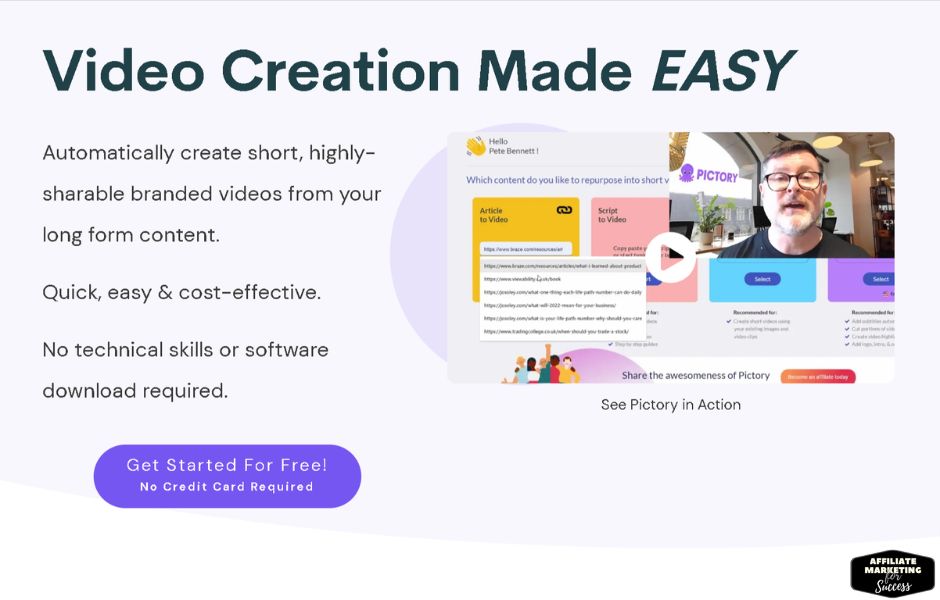
Pictory.ai Video Generation Platform
Pictory is a cloud-based AI video platform that converts written scripts, articles, and blog posts into high-retention captioned videos in under 10 minutes. Includes access to over 10 million stock assets, auto-generated subtitles, and ElevenLabs text-to-speech integrations.
- Automatic Script-to-Video storyboard mapping.
- Direct Blog Post URL scraping (ignores ads/headers).
- High-accuracy automated transcription and subtitles.
- Direct access to Storyblocks and Getty Images libraries.
- Voiceover synchronization and background music balance.
Core Feature Breakdown: The Pictory Engine
To maximize the Affiliate Systems of your affiliate publishing model, you must master the four distinct creation paths inside the Pictory dashboard. Each path caters to a specific content source:
1. Script to Video (Text-Based Automation)
The Script to Video editor is the foundation for most review channels. You write or paste a video script (ideally structured between 400 and 900 words to maintain high mobile retention). Pictory’s NLP parser extracts key entity matches and maps them to B-roll scenes. If you use advanced AI writing tools like NeuronWriter or Frase, you can generate well-structured, entity-rich scripts optimized for search keywords, which you can paste directly into this module to build highly relevant videos.
2. Article to Video (URL-Based Scraping)
If you own a large blog catalog, this tool acts as a rapid content recycling plant. Paste any live URL (such as an in-depth product review), and the scraper isolates the core HTML content while ignoring sidebars, ads, headers, and footer blocks. Pictory selects key sentences to form a storyboard. You can edit this storyboard, add custom screen captures, and render a summary video to place above the fold of your original article, keeping readers engaged longer.
3. Edit Video Using Text (Transcript Editor)
This is a powerful feature for creators recording talking-head videos or product walkthroughs. Instead of editing video on a complex timeline, you upload your video file. Pictory generates a full text transcript. Deleting a sentence, word, or vocal pause (such as “um” or “ah”) from the transcript cuts the corresponding video frames automatically, making editing as simple as editing a Google Doc.
4. Visuals to Video (Slideshow Compiler)
This path allows you to upload custom screenshots, screen recordings, and brand assets to stitch them together into a structured compilation. You can overlay text instructions, apply clean transitions, and add background music. This is perfect for building visual product comparison slides or summarizing the key specs of two competing software tools.
Step-by-Step Affiliate Content Repurposing Workflow
To get the best return from your content, you should not treat video as an afterthought. Below is the exact step-by-step workflow for turning a ranking blog post into a multi-channel video asset funnel. For broader operational context, review our Affiliate SEO Strategy Hub and learn how to align these visual assets with your conversion funnels.
| Workflow Stage | Actionable Execution Steps | Validation / Quality Check |
|---|---|---|
| 1. Niche Selection | Identify high-intent articles ranking on page 2 or in low CTR brackets. Use your best SEO tools for affiliate marketers to find high-impression, transactional terms. | Confirm the target product offers active affiliate programs and healthy commissions. |
| 2. Script Extraction | Extract the core review arguments: Hook, Problem, 3 Key Features, Limitations, and Verdict. Keep scripts under 250 words for short clips. | Confirm the script sounds natural and the voice delivery fits under 90 seconds. |
| 3. Storyboard Sync | Paste the script into Pictory. Review the AI’s B-roll matches. Swap generic stock clips for custom product screenshots. | Ensure every visual clip relates directly to the voiceover statement. Avoid confusing visual jumps. |
| 4. Audio Sync | Upload a custom voiceover recorded with a Blue Yeti, or generate a voice file using Pictory’s ElevenLabs integration. | Check the pronunciation of brand names, product pricing, and technical terms. |
| 5. Caption Review | Apply high-contrast, brand-aligned caption templates. Select a 9:16 layout for vertical platforms (Shorts, TikTok, Reels). | Ensure text is centered, remains in safe zones, and is easy to read on small mobile screens. |
| 6. Embed & Track | Publish the video on YouTube. Embed the player at the top of your blog post. Add UTM-tagged affiliate links in video descriptions. | Check page speed metrics to confirm the embedded video player does not slow mobile load times. |
Helpful Video Walkthrough & Demo
Pricing & Subscription Logic: Which Plan Fits You?
Pictory is a subscription-based SaaS tool with tiered plans. Check this comparison of pricing limits to see which fits your publishing volume:
| Plan Tier | Monthly Cost (Billed Annually) | Video Limits & Allotments | Best Fit For |
|---|---|---|---|
| Free Trial | $0 (No Credit Card Required) | Create up to 3 video projects (up to 10 minutes each). | Testing the interface, rendering speed, and template options. |
| Starter Plan | $19 / month | 30 videos / month (up to 10 minutes per video). | Solo bloggers starting to experiment with video repurposing. |
| Professional | $39 / month | 60 videos / month (up to 20 minutes per video), ElevenLabs integrations, custom templates. | Active affiliates running multiple niche sites and weekly content queues. |
| Teams Plan | $99 / month | 90 videos / month (up to 30 minutes per video), 3 user seats, collaborative sharing. | Small agencies, editing teams, and multi-channel content networks. |
Pricing Verification Note: Pricing tiers and feature allotments are verified for 2026. Please check the official Pictory pricing page to confirm any seasonal discounts or packaging updates before subscribing.
Deep Dive: Inside the Pictory Semantic Video Engine
Unlike basic editing tools, Pictory uses a semantic parsing engine. When you upload a script, the NLP layer breaks the text into conceptual nodes. It isolates key nouns, verbs, and entities to search its video library for B-roll matches. Instead of a simple keyword search, it runs vector calculations to match B-roll to the theme of your sentence.
However, this engine has limits. For example, if your script says “boosting website conversions,” the AI might select stock footage of a runner cross a finish line. To keep your reviews looking professional and authoritative, use the manual overwrite option. Click the “Visuals” library tab, search for exact terms like “web analytics” or “WordPress dashboard,” and replace generic clips. Uploading your own screen recordings of the product UI is the best way to prove real-world testing (EEAT) and secure citations in AI engine summaries.
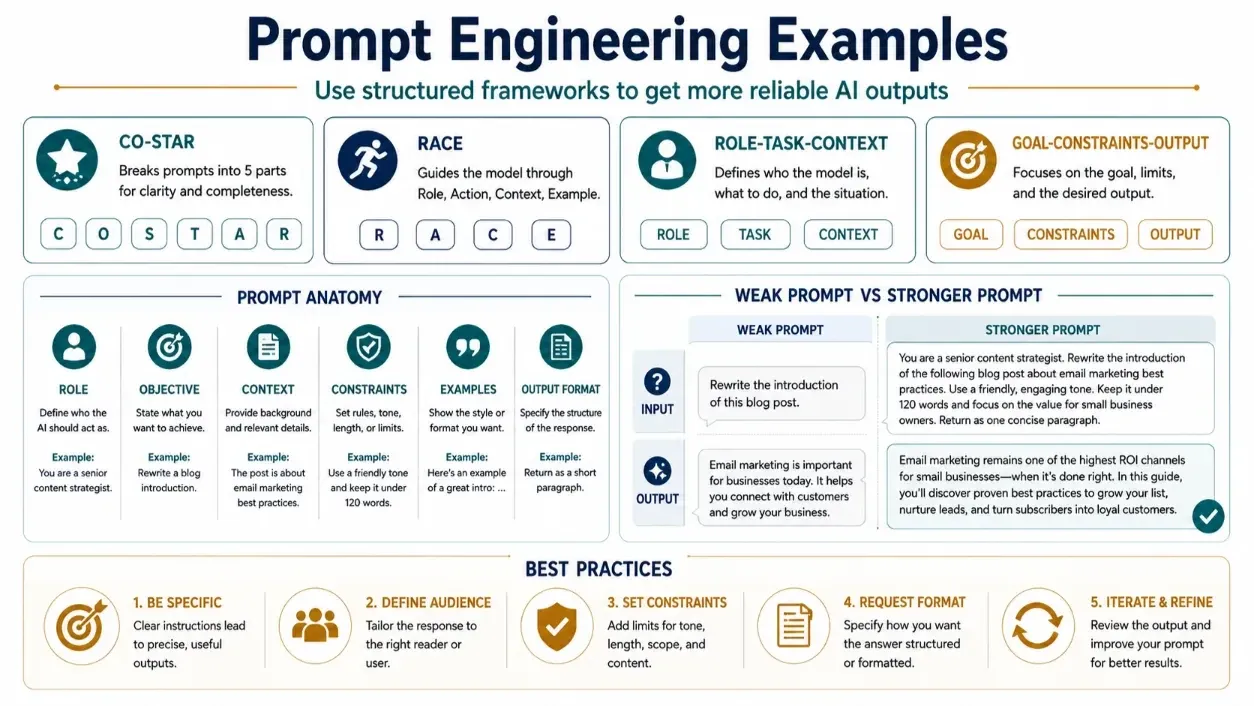
Copy-and-Paste Prompt Bank: 15 Custom Prompts
Use these custom prompts in ChatGPT, Claude, or Perplexity to outline, write, and refine scripts for Pictory. Just swap out the bracketed information with your product details:
- Act as an affiliate marketer. Turn this written section about [Product Name] into a 45-second script under 100 words. Write in a conversational tone with short, punchy sentences.
- Write a 90-second script comparing [Tool A] vs [Tool B] for a beginner audience. Focus on pricing, ease of use, and one key limitation of each.
- Generate five high-CTR hook options for a vertical YouTube Short reviewing [Product Name]. Keep each under 10 words and do not make exaggerated income claims.
- Summarize this product comparison table [paste table] into a 150-word voiceover script explaining which tool is best for low-budget creators.
- Create a storyboard layout with B-roll visual ideas for Pictory AI based on this blog section: [paste text]. Suggest specific B-roll ideas for each sentence.
- Audit this video script [paste script] for affiliate compliance. Point out any exaggerated claims, missing disclosures, or unverified claims.
- Write a natural, non-aggressive call to action for a video script explaining the benefits of starting a free trial of [Tool Name] using my affiliate link.
- Rewrite this transcript [paste transcript] to remove vocal filler, redundant phrases, and pauses, ensuring the text flows naturally.
- Write a YouTube video description for a review of [Product Name] that includes an affiliate link, a clear FTC disclosure, and a time-stamped breakdown of features.
- Convert this step-by-step checklist into a script format where each step is a separate scene with a maximum of 12 words of on-screen text.
- Draft three variations of a video hook for [Service Name] targeting: 1. A skeptical buyer, 2. A beginner, and 3. An advanced user looking to optimize.
- Suggest stock video keywords and visual themes that would support a script explaining [Technical Topic] without using boring office meetings B-roll.
- Create a content repurposing plan to turn this 2,500-word review into: one YouTube explainer video, three vertical TikTok teasers, and a short text newsletter summary.
- Write a script for a 45-second FAQ video that answers this People Also Ask question: “How does [Product] compare to [Alternative] in pricing?”
- Audit this voiceover script for readability. Break up long compound sentences into active, single-clause statements that are easy to narrate.
Pros, Cons, and Crucial Limitations
To make an informed decision, you should understand where Pictory falls short. AI video generation is a helpful assistant, but it requires human editing to produce high-quality results:
Pictory AI Pros
- Repurposing Speed: Turns standard text scripts and articles into captioned video drafts in minutes.
- Licensed Library: Paid plans include access to millions of royalty-free stock assets, preventing copyright flags.
- Accurate Subtitles: The auto-transcription engine is highly accurate and saves hours of manual transcription work.
- Low System Overhead: As a cloud-based SaaS, it does not require a high-end graphics card to render videos quickly.
Pictory AI Cons & Limitations
- Generic B-Roll Selection: The NLP parser can choose unrelated visuals (e.g., matching “growth” to a growing plant instead of a business chart). You must review and replace these manually.
- Robotic Default Voiceovers: The default text-to-speech voices can sound robotic. We recommend recording your own voice with a Blue Yeti mic or using premium ElevenLabs voice integrations.
- Basic Timeline Editing: You cannot overlay multiple video tracks or perform advanced timeline editing like in Premiere.
- Non-Refundable Plans: Subscriptions are generally non-refundable. Test the platform thoroughly using the free trial before buying.
Common Pictory Mistakes & Troubleshooting
Avoid these common pitfalls when publishing AI-assisted video content to protect your rankings and conversion rates:
| Problem Encountered | Root Cause Analysis | Actionable Resolution / Fix |
|---|---|---|
| Videos look generic or spammy | Relying entirely on the AI’s default B-roll selections without editing. | Manually replace at least 40% of the default B-roll clips with custom screenshots, screen recordings of the product UI, or specific library searches. |
| Robotic voice drives viewers away | Using low-grade built-in text-to-speech options. | Record your own voiceover using a quality USB condenser microphone, or upload a cloned voice file from ElevenLabs. |
| High video views but zero conversions | Weak calls to action (CTA) and missing links in video descriptions. | Add a clear link at the top of your description, match the video topic to a specific landing page, and track clicks using UTM parameters. |
| Blog-to-video URL import fails | The site’s security plugins or paywalls are blocking the Pictory scraper. | Copy the raw text of your blog post and paste it directly into the “Script to Video” block instead of importing via URL. |
Frequently Asked Questions
Is Pictory AI good for affiliate marketing?
Yes. Pictory is effective for converting written product reviews and comparisons into short B-roll videos, TikToks, and YouTube Shorts. However, you should treat it as a draft assistant. You still need to upload custom screenshots, record a clear voiceover, and add appropriate affiliate disclosures to build long-term trust.
Can I make YouTube Shorts using Pictory?
Yes, Pictory allows you to select a 9:16 vertical ratio during template selection. It formats subtitles to fit mobile screens. Ensure your script’s hook is placed in the first 3 seconds to maximize viewer engagement on Shorts feeds.
Does Pictory replace a professional video editor?
No. Pictory is built for content scaling and speed, not complex multi-track timeline editing or advanced sound design. For high-end brand videos and complex tutorials, traditional editing software remains necessary.
What should I check before publishing a video generated by Pictory?
Always review caption spellings (especially brand names and pricing), verify that B-roll clips match the voiceover context, confirm you have the licensing rights for the music, and check that you have included a clear affiliate disclosure.
Does the Pictory free trial require a credit card?
No. Pictory’s free trial allows you to create up to 3 video projects (up to 10 minutes each) without entering any billing details, making it easy to test their template library and workflows risk-free.
Sources, Editorial Policy & Reference Documentation
Our review process follows strict editorial guidelines. We verify all product features, prices, and limits using official developer documentation and hands-on testing. We do not accept paid sponsorships to guarantee positive ratings.
- Official Pictory.ai Pricing Specifications
- FTC Guidelines: Disclosures 101 for Social Media Influencers
- Google Search Central: Creating Helpful, Reliable, People-First Content
- Google Search Central: Qualify Outbound Links (Sponsored & Nofollow Attributes)
- AMFS Blueprint for Answer Engine Optimization (AEO)
- AMFS Guide to Generative Engine Optimization (GEO)


Alexios Papaioannou is the founder and lead editor of Affiliate Marketing for Success. He focuses on affiliate marketing systems, SEO, content strategy, monetization design, and the impact of AI-driven search on publishers. Editorial background, disclosure standards, and correction policy are documented on the site’s About Alexios and Editorial Policy pages.