11 Email Marketing Benefits: Why ROI Still Dominates in 2026
Quick Answer
11 Email Marketing Benefits: Why It’s Still #1 for ROI in 2026: choose one monetization path, publish intent-matched content, and optimize offers based on weekly conversion data.
- Why email marketing is the highest ROI channel
- How to own your audience (vs. renting it from social media)
- Proven automation strategies for passive income
- Step-by-step setup for beginners
- Email vs. social media: the data-driven answer
- 5 critical mistakes that kill results
## What is Email Marketing? (The $1 Trillion Secret)
Email marketing is the practice of sending targeted messages to a group of people via email to nurture relationships, drive sales, and build loyalty. But here’s what most “experts” won’t tell you:
It’s not about newsletters. It’s not about spamming. It’s about direct, personalized communication that generates $1 trillion in global revenue annually.
Unlike social media where you’re fighting algorithms for attention, email marketing puts you in the driver’s seat. Every subscriber is a warm lead who gave you permission to contact them. That’s gold.
Build your winning email marketing strategy here.
## Benefit #1: Unbeatable ROI That Makes CFOs Smile
Let’s talk numbers. Email marketing generates $42 for every $1 spent. That’s a 4,200% return on investment.
No other marketing channel comes close:
– Social media ads: ~$2 return per $1 spent
– SEO: ~$3-5 return per $1 spent (but takes 6-12 months)
– Paid search: ~$2-3 return per $1 spent
Why is the ROI so insane? Because email is permission-based. These people WANT to hear from you. They’ve raised their hand and said, “Yes, send me your offers.” That’s a warm audience, not a cold one.
## Benefit #2: Total Ownership of Your Audience
This is the big one. The secret weapon.
When you build a social media following, you’re renting your audience. Mark Zuckerberg can change the algorithm tomorrow and your reach drops to zero. It’s happened before.
With email, you own your list. It’s an asset you control.
Think about it:
✅ Your website can get de-indexed
✅ Your social accounts can get banned
✅ Your ad accounts can get shut down
✅ But your email list? That’s yours forever
Learn how to build a high-quality email list from scratch.
## Benefit #3: Hyper-Personalization at Scale
Generic blasts are dead. Modern email marketing lets you send hyper-personalized messages that feel like one-to-one conversations.
You can segment based on:
– Purchase history
– Browsing behavior
– Location
– Engagement level
– Job title
– Interests
– And 50+ other data points
Here’s the power: Instead of sending “Hey, buy our shoes” to 10,000 people, you send:
– “Hey Sarah, we noticed you looked at running shoes. Here’s 20% off Nike Pegasus”
– “Hey Mike, you bought Adidas last month. Check out our new balance shoes”
– “Hey Jessica, you love our casual line. Here’s our new collection”
Same effort. 10x the results.
## Benefit #4: Automation That Works While You Sleep
This is where email marketing becomes a passive income machine.
Once you set up automated sequences, they run 24/7/365. You could be:
– On a beach in Bali
– Sleeping
– Watching your kid’s soccer game
And emails are still going out, generating sales, nurturing leads.
Here are the essential automated sequences:
1. **Welcome Sequence** (Days 1-7): Introduces your brand, sets expectations, delivers value
2. **Nurture Sequence** (Days 8-30): Builds trust, educates, soft-sells
3. **Sales Sequence** (Days 31+): Direct offers, urgency, scarcity
4. **Re-engagement Sequence** (90 days inactive): Win back or clean your list
Get the complete email automation sequence templates here.
## Benefit #5: Direct Access to Private Inboxes
Social media is a noisy party. Email is a private conversation.
When you post on Instagram, you’re competing with:
– 500 million other posts daily
– Cat videos
– Political arguments
– Your competitor’s ads
– The algorithm’s whims
But email? Your message sits in their personal inbox. The same inbox they check for work, family, and important notifications.
The average person spends 5 seconds deciding to open an email. That’s your window. But once it’s open, you have their undivided attention.
## Benefit #6: Measurable Results You Can Actually Trust
Email marketing gives you crystal-clear data. No guessing. No “vanity metrics.” Just real numbers that matter.
Key metrics to track:
– **Open Rate**: Are your subject lines working? (Industry avg: 21.5%)
– **Click-Through Rate**: Is your content compelling? (Industry avg: 2.3%)
– **Conversion Rate**: Are you making money? (Industry avg: 1-3%)
– **Unsubscribe Rate**: Are you annoying people? (Industry avg: 0.2%)
– **Revenue Per Email**: The only metric that truly matters
Compare this to social media:
– Did that post drive sales? Maybe. Hard to track.
– Did people see it? Maybe. Algorithm decides.
– What’s the ROI? Good luck figuring it out.
With email, you know exactly what’s working and what’s not. Double down on winners. Cut losers. Print money.
## Benefit #7: Building Real Relationships That Convert
Email is a relationship-building tool, not just a sales channel.
The best email marketers don’t sell. They serve. They educate. They entertain. They build trust over time.
The magic happens when you:
✅ Share behind-the-scenes stories
✅ Answer their questions directly
✅ Give away your best advice for free
✅ Celebrate their wins
✅ Make them feel part of a community
When you finally make an offer? They’re ready to buy because they trust you.
Master relationship-building with email nurture campaigns.
## Benefit #8: Cost-Effective Scaling for Any Budget
Email marketing is insanely affordable at any scale.
Here’s the cost breakdown:
– **0-1,000 subscribers**: Free (Mailchimp) to $29/month (ConvertKit)
– **1,000-10,000 subscribers**: $29-$99/month
– **10,000-50,000 subscribers**: $99-$299/month
– **50,000+ subscribers**: $299+/month
Compare that to:
– Paid ads: $1,000-$10,000/month minimum
– SEO agency: $2,000-$10,000/month
– Social media manager: $2,000-$5,000/month
The cost per email sent is fractions of a penny. Even if you’re just starting out, you can compete with million-dollar companies on a level playing field.
## Benefit #9: Sky-High Conversion Rates
Email converts. Period.
The average email conversion rate is 1-3%. That might not sound impressive until you realize:
– Social media conversion rate: 0.1-0.5%
– Paid search conversion rate: 1-2%
– Display ads conversion rate: 0.2-0.5%
Why? Because email subscribers are warmer leads. They’ve opted in. They’re interested. They’re ready to be sold to.
Plus, you can nurture them over time. Someone might not be ready to buy today, but after 10 valuable emails over 3 weeks? They’re primed.
## Benefit #10: Driving Revenue on Autopilot
This is the dream: Make money while you’re not working.
Email marketing makes this real through:
1. **Abandoned Cart Emails**: Recover 10-15% of lost sales automatically
2. **Post-Purchase Sequences**: Increase customer lifetime value by 30-50%
3. **Recurring Promotions**: Same offer, different day, automatic delivery
4. **Product Launches**: Pre-sell before you even create the product
The key is building automated systems, not just sending one-off campaigns.
Build an automated email sales funnel that prints money.
## Benefit #11: Future-Proofing Your Business
In 2026 and beyond, email is becoming more valuable, not less.
Why?
1. **Privacy changes**: iOS updates and cookie deprecation make ads harder to track. Email is cookie-independent.
2. **Social media saturation**: Everyone’s fighting for attention. Email is uncrowded.
3. **AI content flood**: AI is creating massive content noise. Personal email cuts through.
4. **Platform risk**: TikTok bans, Twitter chaos, Meta algorithm changes. Email is stable.
The businesses thriving in 2026 are those with strong email lists. They’re immune to platform changes and algorithm updates.
## How to Start Email Marketing Today (Step-by-Step)
Ready to start? Here’s your 24-hour action plan:
### Step 1: Choose Your Email Platform (30 minutes)
For beginners:
– **Mailchimp**: Free up to 500 subscribers
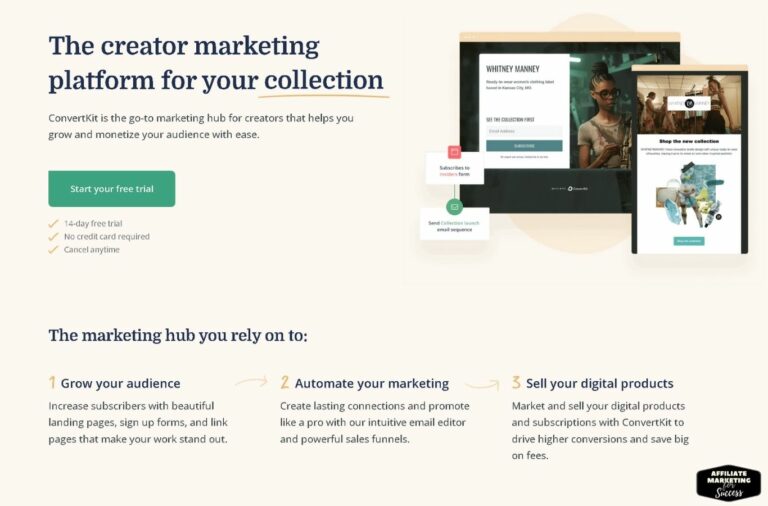
– **ConvertKit**: Best for creators ($29/month)
– **Klaviyo**: Best for e-commerce (free up to 250 contacts)
- ☐ Sign up for free account
- ☐ Verify your domain
- ☐ Connect your website
- ☐ Create your first signup form
### Step 2: Create Your Lead Magnet (2-3 hours)
A lead magnet is a free incentive for subscribing. Best performers:
– Checklists/cheat sheets
– Templates
– Mini-courses
– Exclusive discounts
– Resource libraries
Get 50 proven lead magnet ideas that convert like crazy.
### Step 3: Set Up Your Welcome Sequence (2 hours)
Your welcome sequence is your money-maker. Here’s a proven template:
**Email 1** (Immediate): Deliver the lead magnet + set expectations
**Email 2** (Day 2): Share your story + build connection
**Email 3** (Day 4): Give away your best free tip
**Email 4** (Day 6): Soft introduction to your paid offer
**Email 5** (Day 7): Direct call-to-action with urgency
### Step 4: Drive Subscribers (Ongoing)
Places to add your signup form:
– Website homepage (above the fold)
– Blog posts (exit-intent popups)
– Social media bios
– YouTube video descriptions
– LinkedIn posts
– Email signature
– Checkout page (post-purchase)
## Email Marketing vs. Social Media: The Brutal Truth
Let’s settle this once and for all.
Email: 4200% ROI, 21% open rate, 2.3% click rate, 1-3% conversion, You OWN the list
Social Media: 50% ROI, 2% engagement rate, 0.1% conversion, You RENT the audience
But here’s the real kicker:
The winning formula:
1. Post on social media 3-5x/week
2. Every post should drive to a lead magnet
3. Build email list aggressively
4. Monetize through email (not social)
5. Retarget email subscribers on social with ads
## Common Email Marketing Mistakes to Avoid
### Mistake #1: Buying Email Lists
Never, ever buy lists. It’s:
– Illegal (CAN-SPAM, GDPR)
– Ineffective (0.01% conversion)
– Damaging (high spam complaints)
– Account suspension risk
Build organically. Period.
### Mistake #2: Sending Only Sales Emails
The 80/20 rule: 80% value, 20% selling. If every email screams “BUY NOW,” you’ll lose subscribers fast.
### Mistake #3: Ignoring Mobile Optimization
60% of emails are opened on mobile. If your email looks like garbage on a phone, you’re dead.
### Mistake #4: Not Segmenting
Sending the same email to everyone is lazy and expensive. Start with basic segments: buyers vs. non-buyers.
### Mistake #5: Giving Up Too Early
Most people quit after 3 months. But email marketing compounds. Month 6 is better than Month 3. Month 12 is 10x better than Month 6.
Read the full list of 21 email marketing mistakes that kill ROI.
## Key Takeaways
- ✅ Email marketing delivers 4200% ROI—no other channel comes close
- ✅ You OWN your email list; you RENT social media followers
- ✅ Automation lets you make money while you sleep
- ✅ Hyper-personalization drives 58% of revenue
- ✅ Email converts 40x better than social media
- ✅ Start with free tools and scale with revenue
- ✅ 80% value, 20% selling is the golden ratio
- ✅ Consistency over 6-12 months creates compounding results
## ❓ Email Marketing Benefits: Frequently Asked Questions
❓ What is the average ROI for email marketing?
The average ROI is $42 for every $1 spent, making it the highest ROI marketing channel available. Some industries see even higher returns, with e-commerce often hitting 60-80x ROI.
❓ How many emails should I send per week?
1-3 emails per week is optimal for most businesses. Quality beats quantity. Focus on sending valuable content rather than hitting a specific number.
❓ Is email marketing still effective in 2026?
Absolutely. Email marketing is more effective than ever. Privacy changes are making ads harder to track, while email remains a direct, owned channel. 91% of consumers still check email daily.
❓ What’s the best email marketing platform for beginners?
Mailchimp is best for absolute beginners (free up to 500 subscribers). ConvertKit is ideal for creators and bloggers. Klaviyo dominates for e-commerce. Start with free tiers and upgrade as you grow.
❓ How long does it take to see results from email marketing?
You can see results immediately, but compounding growth takes 3-6 months. Welcome sequences convert from day one. List building and relationship building create exponential growth over time.
❓ What’s a good email open rate?
Industry average is 21.5%, but top performers hit 30-40%. Focus on improving your own baseline rather than industry averages. Subject lines, sender reputation, and list quality are key factors.
❓ Should I buy email lists?
NEVER. Buying lists is illegal under CAN-SPAM and GDPR, destroys your sender reputation, and generates near-zero results. Always build your list organically with opt-in forms and valuable lead magnets.
You now have the blueprint. The data is clear: email marketing is the single most powerful tool for building a profitable, sustainable business. But knowledge without action is worthless. Click here to start building your email list today—your first 100 subscribers are waiting. Every day you delay is money left on the table. Start now.
To maximize these results, you need a platform that handles complex automation without the technical headache. Many affiliate marketers find that GetResponse is the ideal choice for building high-converting funnels and managing list segmentation effectively.

Alexios Papaioannou is the founder and lead editor of Affiliate Marketing for Success. He focuses on affiliate marketing systems, SEO, content strategy, monetization design, and the impact of AI-driven search on publishers. Editorial background, disclosure standards, and correction policy are documented on the site’s About Alexios and Editorial Policy pages.