
Cloudways Review 2026: Is It Worth It for Hosting, Speed, and Scalability?
Hosting review
Cloudways Review 2026: Is It Worth It for WordPress, Affiliate Sites, and Faster Growth?
If you are considering Cloudways, the real question is not whether it can host a website. Plenty of companies can do that. The real question is whether Cloudways gives you enough performance, control, flexibility, and managed convenience to justify choosing it over simpler shared hosting or more locked-down premium managed hosts.
After reviewing how Cloudways fits real website operations, my take is simple: Cloudways is strongest for site owners who care about speed, scalability, and long-term control without wanting to manage raw infrastructure themselves. It is especially attractive for WordPress site owners, affiliate marketers, agencies, and businesses that want better performance than shared hosting without going fully DIY.
Affiliate disclosure
This review includes affiliate links. Read our affiliate disclosure.

Quick verdict
Cloudways is worth it for site owners who want stronger performance, more hosting control, and better scaling headroom than typical shared hosting offers. It is especially useful for affiliate sites, growing WordPress businesses, and agencies that care about speed and operational flexibility. It is less compelling for buyers who want the absolute simplest beginner setup with the lowest possible learning curve.
What Cloudways is
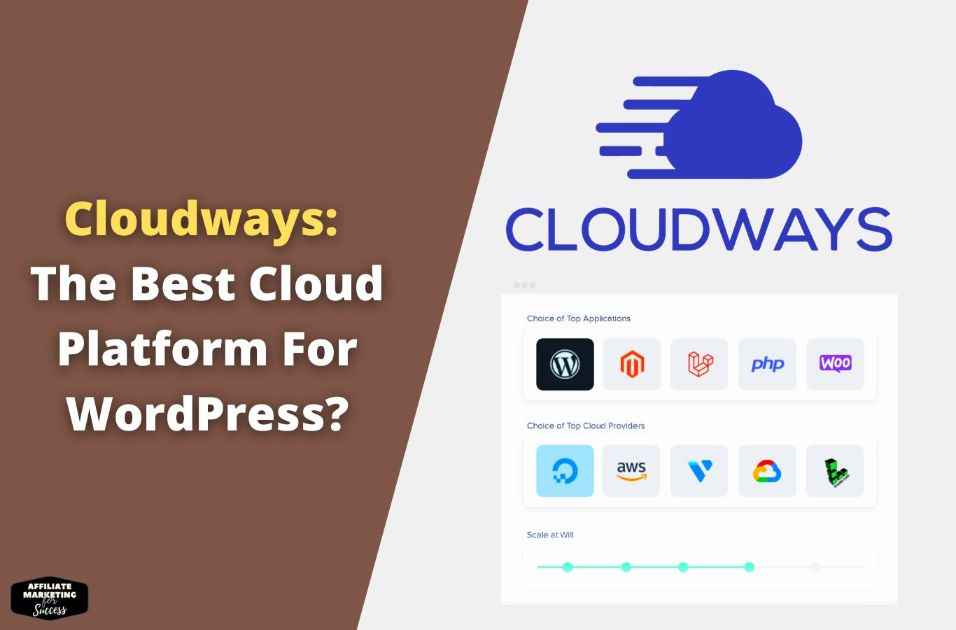
Cloudways is a managed cloud hosting platform that sits between basic shared hosting and full self-managed infrastructure. Instead of forcing you to run a server yourself, it gives you managed hosting on top of providers like DigitalOcean, Vultr, AWS, and Google Cloud. That makes it easier to get better performance and more flexibility without becoming your own sysadmin.
That positioning matters because it explains why Cloudways appeals to performance-minded site owners. It is not designed to be the cheapest host or the most beginner-proof host. It is designed to give users a better balance of speed, control, and managed convenience than typical low-end hosting.
This is why Cloudways is usually a stronger recommendation for serious site owners than for pure beginners. The value is not just “hosting that works.” The value is hosting that gives the site room to grow, better operational stability, and more performance headroom before hosting becomes the next bottleneck.
If your business depends on organic traffic, conversions, or a WordPress stack that cannot afford random slowdowns, that distinction matters a lot. Better hosting does not guarantee growth, but weak hosting can absolutely limit it.
Who Cloudways is best for
- Affiliate marketers who care about speed and uptime
- WordPress site owners outgrowing basic shared hosting
- Agencies managing multiple client sites
- Businesses that want better performance without managing raw servers
- Site owners who want more flexibility than typical beginner hosting offers
Cloudways is strongest when hosting quality actually affects the business. That means traffic matters, conversion paths matter, Core Web Vitals matter, and operational flexibility matters. If a site is a real asset, better hosting starts to look less like a technical expense and more like revenue infrastructure.
An affiliate site owner can use Cloudways to support faster money pages, more stable plugin stacks, and better scaling as traffic grows. An agency can use it to avoid some of the friction of juggling weak shared hosting environments. A business can use it to reduce the odds that hosting becomes the bottleneck as marketing improves.
The common pattern is easy to see. Cloudways becomes more attractive as soon as the site becomes important enough that hosting quality affects growth, trust, or revenue. If the site is serious, the hosting conversation becomes a business conversation.
That is especially relevant for affiliate marketers because hosting affects more than load time. It affects how stable comparison pages feel, how smoothly plugins run, how well visitors move through monetization paths, and how safely the site can keep growing. Those are not abstract technical concerns. They affect real outcomes.

Who should skip Cloudways
- Beginners who want the absolute easiest setup possible
- Users who do not care about performance beyond “good enough”
- Site owners who want bundled all-in-one beginner hosting simplicity
- People who prefer the cheapest possible hosting even if tradeoffs are real
This matters because Cloudways can be easy to overbuy if the site is tiny, the workflow is simple, and the business does not yet need better infrastructure. Not every site needs stronger hosting immediately. But once performance, scaling, and stability begin to matter, basic hosting becomes a false economy surprisingly fast.
Cloudways is also not the right fit for people who want every hosting choice abstracted away. It gives more flexibility than beginner-first hosts, and that flexibility is useful, but it can also feel less frictionless if your only priority is the easiest possible first launch.
That is why “who should skip it” matters almost as much as “who should buy it.” Strong review pages save good buyers time, but they also save the wrong buyers from expensive mismatch. That makes the final recommendation more credible, not less.
That kind of filtering is one of the clearest trust signals on a commercial page. It shows the recommendation is tied to use case, not just to an affiliate link. That matters for credibility, conversion quality, and long-term brand trust.

Core features that matter most
- Managed cloud hosting without full DIY server maintenance
- Choice of infrastructure providers such as DigitalOcean, Vultr, AWS, and Google Cloud
- Better scaling options than typical shared hosting
- WordPress-friendly environment with performance-oriented tooling
- Staging, backups, and operational flexibility for more serious site owners
- Performance headroom that better supports growing traffic and monetization pages
The biggest advantage is not one isolated feature. It is the combination of better infrastructure and easier management. Cloudways gives buyers a path to stronger hosting without forcing them to become infrastructure specialists.
For affiliate sites, that matters because hosting problems rarely stay technical. Slow pages hurt trust. Weak stability hurts user experience. Fragile environments make plugin, caching, and revenue-page work harder. Better hosting supports better business outcomes even when visitors never think about the host directly.
That is also where many buyers underestimate hosting. They compare sticker price instead of total business effect. But if a stronger host improves speed, stability, and conversion paths, the result can matter more than the monthly fee difference.
In practice, that can mean fewer performance headaches, fewer growth bottlenecks, and fewer moments where the site feels like it is outgrowing its environment. Those benefits are hard to value in advance, but very easy to appreciate once weak hosting starts causing friction.
Real pros and real limitations
Pros
- better performance and scaling than typical shared hosting
- managed convenience with more control than beginner-first hosts
- strong fit for WordPress businesses and affiliate sites
- more operational flexibility for serious site owners
- good middle ground between cheap hosting and full server management
Limitations
- not the simplest option for total beginners
- can feel more involved than entry-level shared hosting
- buyers who only want low-cost simplicity may not use the extra flexibility
- managed cloud hosting still requires more operational thinking than starter hosts
The honest tradeoff is simple: Cloudways is more powerful than basic hosting, but it also expects a more serious user. That is not a flaw. It is just the nature of the product. The buyers who benefit most are the ones who actually value the extra performance and control.
This is why some people love Cloudways and others feel it is more hosting than they need. They are optimizing for different things. One buyer wants growth-ready infrastructure. The other wants easy setup with minimal decisions. Cloudways serves the first buyer better than the second.
That difference also explains why user reviews can look mixed even when the product is strong. A tool can be excellent for the right user and still disappoint the wrong one. The key is whether the buyer values performance and flexibility enough to justify the additional complexity.
Pricing and plan overview
Cloudways pricing depends on the underlying infrastructure provider and server choice. Buyers should always verify current pricing directly on the live Cloudways site before purchasing, because provider options and plan details can change.
The practical question is not just the starting price. It is what the performance and flexibility are worth relative to the site you are running. For businesses where speed, uptime, and scaling headroom matter, the value can be easy to justify. For tiny side projects, the case is weaker.
That is why the smartest pricing question is not “what is the cheapest plan?” It is “what hosting quality does the site actually need now, and what pain does weak hosting create?” If the site already matters, cheaper hosting is not always the cheaper decision.
That pricing lens is important because hosting costs are rarely judged in isolation. The real cost is monthly spend plus downtime risk plus lost performance plus operational friction. A better host can be more expensive on paper and still cheaper for a serious site.
How Cloudways compares with alternatives
- Cloudways vs Bluehost: Cloudways is stronger for performance and growth-minded site owners, while Bluehost is simpler for absolute beginners.
- Cloudways vs Kinsta: Kinsta is more locked-down premium managed hosting, while Cloudways offers more infrastructure choice and flexibility.
- Cloudways vs WPX: WPX is attractive for simplicity and support, while Cloudways is often more appealing when flexibility and broader cloud-provider choice matter.
- Cloudways vs SiteGround: SiteGround can be easier for mainstream users, while Cloudways is more compelling when better scaling and cloud-style hosting logic matter.
These comparisons matter because buyers often compare hosts with very different philosophies. Cloudways is not mainly competing on beginner simplicity. It is competing on managed performance, flexibility, and better long-term fit for serious sites.
If your bottleneck is weak hosting quality, Cloudways is easier to defend. If your bottleneck is just getting a site online fast with minimal decisions, simpler hosts can still fit better. That distinction is what makes the review useful rather than generic.
This is also where better decision support matters. A buyer choosing between Cloudways and Bluehost is not really choosing between two logos. They are choosing between beginner simplicity and stronger long-term infrastructure. That is a much clearer decision frame.
Testing methodology
- Workflow judged: hosting fit for WordPress performance, scaling, and operational practicality
- Use-case lens: affiliate sites, WordPress businesses, agencies, and performance-sensitive projects
- Main criteria: performance value, hosting flexibility, managed convenience, and business fit versus simpler hosts
- Best-fit conclusion: strongest for buyers who care about speed, control, and serious site growth
This is the right frame for reviewing Cloudways. The point is not whether it can host a site. The point is whether it creates a better environment for serious sites that need stronger performance and operational headroom.
That also explains why the strongest recommendation here is selective rather than broad. Cloudways is not automatically the best host for everyone. It is much easier to recommend when the business already feels the cost of weak hosting.
That selective framing is part of what makes the page more credible. It treats hosting as a business-fit decision, not just a generic checklist. That is better for readers, better for conversions, and better for long-term authority.
Best use cases for affiliate marketers, agencies, and WordPress site owners
- hosting affiliate sites where page speed affects trust and conversion
- running WordPress stacks that outgrow cheap shared hosting
- supporting growth without moving all the way to DIY infrastructure
- managing client sites with more control and flexibility
- improving the hosting foundation behind content and monetization assets
The strongest use case is not just “need hosting.” It is needing better hosting because the site has started to matter more. That is where Cloudways becomes easier to justify than low-cost beginner alternatives.
For affiliate marketers, that can mean better performance on money pages, fewer problems with heavier plugins, and a cleaner path as traffic grows. For agencies, it can mean better control across client projects. For businesses, it can mean that stronger marketing is not being held back by fragile infrastructure.
That is what makes Cloudways more than a technical recommendation. It is often a growth-quality recommendation. If the business is already investing in content, SEO, or monetization, better hosting can support those efforts more directly than people expect.
Internal next steps and related tools
- Read Cloudways vs Bluehost for Affiliate Sites for a direct comparison.
- See the main tools hub for broader stack selection.
- Review Affiliate SEO in 2026 if you want hosting and search strategy to work together.
- Use AI Affiliate Marketing if you are improving the broader business system, not just the hosting layer.
These internal routes matter because Cloudways is rarely bought in isolation. Buyers evaluating hosting are often also thinking about SEO, site speed, monetization, and broader stack decisions. Better internal routing makes this review more useful as part of a larger decision system.
That is also what improves topical authority. The page is not just selling hosting. It is helping the reader understand how hosting connects to search performance, business growth, and monetization quality. That makes the review stronger for both users and answer engines.
It also makes the page better for AI visibility because it gives clearer, extractable answers about use case, fit, limitations, and business impact instead of relying on vague hosting praise. That kind of explicitness is increasingly valuable.
Is Cloudways worth it?
Yes, for the right site owner. If you care about stronger hosting performance, more control, and a better long-term environment than basic shared hosting provides, Cloudways is worth considering. If you mainly want the simplest beginner setup, lighter hosting can fit better.
The cleanest decision rule is this: buy Cloudways if your bottleneck is weak hosting quality. Skip it if your main priority is the easiest possible first launch and nothing more.
That conclusion is what makes the recommendation more professional and more trustworthy. It does not pretend Cloudways is for everyone. It shows clearly why it is valuable for the buyers who actually need what it does well.
If you think of Cloudways as a performance-and-growth host rather than just another hosting brand, the value proposition becomes much clearer. That is the version of the offer most serious buyers should evaluate.
Cloudways is a smart pick if you care about performance and growth
If your WordPress or affiliate site needs stronger hosting performance, scaling headroom, and more flexibility than shared hosting offers, Cloudways is one of the better options in this category.
- stronger for serious sites than entry-level shared hosts
- better fit for growth-minded operators than beginner-first hosting
- most useful when site performance actually matters to the business
FAQ
Is Cloudways good for WordPress?
Yes. Cloudways is a strong fit for WordPress users who care about better performance, scaling, and more hosting control.
Is Cloudways good for affiliate marketing?
Yes, especially for affiliate site owners who want faster pages, better hosting stability, and more room to grow.
Is Cloudways better than Bluehost?
For most serious affiliate or WordPress sites, yes. Cloudways is usually the stronger long-term hosting choice when performance and flexibility matter more than beginner simplicity.
Who should not buy Cloudways?
People who want the absolute simplest beginner hosting setup and do not need more performance or flexibility may prefer a simpler host.
Is Cloudways worth it?
Yes, if the site is important enough that better speed, uptime, and scaling headroom can improve business results.
Final verdict
Cloudways is best for WordPress businesses, affiliate marketers, and agencies that want better performance and flexibility than basic hosting offers. It is not the best fit for buyers who want the easiest beginner setup possible. If the site is serious and hosting quality matters, Cloudways is a strong option. If simplicity is the only priority, easier beginner hosts may fit better.
Alexios Papaioannou is the founder and lead editor of Affiliate Marketing for Success. He focuses on affiliate marketing systems, SEO, content strategy, monetization design, and the impact of AI-driven search on publishers. Editorial background, disclosure standards, and correction policy are documented on the site’s About Alexios and Editorial Policy pages.