How to Use SEO for Affiliate Marketing: 2026 Strategy Guide
Last reviewed: 2026-02-20.
Related resources: Success Blueprint · ROI Benchmarks · Semrush Review · Affiliate Disclosure
This page may include affiliate links. We may earn a commission at no extra cost to you.
Related Guides
SEO Approach Comparison (Fast Decision)
- Content velocity-first: Faster publishing, weaker long-term rankings if quality is thin.
- Intent + depth-first: Slower production, stronger ranking durability and conversion quality.
Recommendation: Use intent + depth-first for affiliate SEO pages that target revenue keywords.
Quick Answer
If you want better affiliate SEO results in 2026, focus on intent-matched pages, deeper first-hand insights, and stronger internal links to money pages. This approach improves rankings, AI visibility, and conversions more reliably than publishing high-volume generic content.
Best for: Affiliate marketers building long-term organic traffic.
Not ideal for: Churn-and-burn content sites.
How this page is maintained
- Author: Alexios Papaioannou
- Method: Practical implementation + competitive analysis + SEO testing workflow.
- Disclosure: This page may include affiliate links. Recommendations prioritize fit and usefulness.
Here’s the deal: Affiliate Marketing SEO Strategies 2026: Boost Google Rankings & Traffic isn’t as complicated as most people make it. This guide breaks down exactly what works (and what doesn’t) so you can skip the trial-and-error phase.
The Death of the Traditional Affiliate Site
Remember when you could slap together 10 product reviews, build some PBN links, and watch the commissions roll in? Those days are over. Seriously.
Google’s HCU updates have been brutal to thin affiliate sites. But 2026 is different. We’re seeing AI-generated content flood the index at scale. Google’s response? They’re doubling down on trust signals.
Your domain authority means less than ever. Your word count means nothing. What matters now is depth, authenticity, and something I call “editorial DNA.”
Think about it. If anyone can prompt an AI to write “10 Best VPNs in 2026,” why would Google rank yours? They won’t. Unless you’re bringing something AI can’t replicate.
Real testing. Real data. Real stakes.
I know a guy who runs a tiny review site in the camping niche. He doesn’t publish 50 articles a month. He publishes 4. But each one includes:
- 6 months of field testing
- Raw, unedited footage of gear failing
- Side-by-side comparison data he collected himself
- Interviews with actual engineers from the companies
His site gets 12,000 visitors a month. Not 120,000. But his conversion rate is 11.3%. Why? Because when someone lands on his page, they don’t leave. They trust him.
That’s the new game. Depth over breadth. Real over fake.
Bookmark this page right now. You’ll want to come back to it multiple times as you implement these strategies. Trust me on this one.
User Intent: The Real Ranking Factor
Google’s gotten scary good at understanding what users actually want.
Not what they search for. What they WANT.
Matching Search Stage
Someone searching “best running shoes” is in research mode. They want comparisons, pros/cons, expert opinions.
Someone searching “Nike Pegasus 40 review” is in validation mode. They want to confirm their choice. Give them specifics. Real testing. No fluff.
Someone searching “buy Nike Pegasus 40” is ready to buy. Don’t waste their time with more reviews. Give them the best price, fast.
Map your content to these stages. Don’t try to serve all intents with one page.
The Zero-Click Problem
Google’s answering more questions directly in search results. Featured snippets, knowledge panels, etc.
Your job? Give them a reason to click anyway.
How? By going deeper than the snippet. The snippet gives the answer. Your content gives the context. The nuance. The “yes, but…”
Example: If the answer is “X is best,” your content explains WHY, for WHO, and in WHAT SITUATIONS.
That’s click-worthy.
Semantic Saturation
Stop keyword stuffing. Google understands synonyms, related concepts, context.
Write naturally. Cover topics, not just keywords.
Use tools like Surfer or Clearscope to find related terms. But don’t force them. If they don’t fit naturally, skip them.
One affiliate rewrote 50 articles to remove keyword stuffing and add semantic richness. Rankings improved for 43 of them. Average position moved from 8.2 to 3.7.
Write for humans. Google will follow.
Monetization: Beyond Amazon
If you’re still relying solely on Amazon Associates, you’re playing with fire. Their commissions keep dropping. The cookie window is shrinking.
Diversify or die.
Direct Offers
Partner with companies directly. Negotiate custom commission rates.
One affiliate in the fitness niche cut out the middleman. Worked directly with supplement companies. Negotiated 25% commissions instead of 5%. Revenue tripled.
It takes work. But the payoff is huge.
Digital Products
Create your own products. Courses. Guides. Templates.
Use your affiliate content as a funnel. Review physical products. Offer your digital product as the “implementation guide.”
One site reviews camera gear. Sells a $197 photography course. 12% of buyers come from affiliate content. That’s pure profit.
Lead Generation
Sometimes the affiliate commission isn’t the real money.
One site reviews business software. They capture leads for enterprise sales teams. Get $50 per qualified lead. That’s more than the software commission.
Think beyond the immediate sale.
Here’s what nobody tells you: the first 30 days are the hardest. Push through that resistance and everything changes. Most people quit at day 21 — don’t be most people.
Most people fail not because they lack knowledge — they fail because they don’t take action. You’re already ahead just by reading this. Now it’s time to execute.
AI: Friend or Foe?
Everyone’s scared of AI content. You should be. If you’re using it wrong.
But here’s the opportunity: AI can help you create better content, faster. You just can’t let it write for you.
Use AI for Research
AI is incredible at finding patterns in data. Feed it your testing notes. Ask it to find insights.
One affiliate uploads 100 hours of testing footage. AI transcribes it. Finds recurring issues. Creates a checklist for reviews. Saves 20 hours per article.
Use AI as a research assistant, not a writer.
AI for Structure
Staring at a blank page? Use AI to outline. But then rewrite every section. Add your voice. Your stories. Your data.
The outline is the skeleton. You add the flesh and blood.
Detection is a Non-Issue
Stop worrying about AI detectors. They’re unreliable. Focus on quality.
If your content is unique, valuable, and well-tested, it doesn’t matter if you used AI for parts of it.
Google cares about value, not process.
Biggest mistake I see? Trying to do everything at once. Pick ONE strategy from this section, master it completely, then add the next. Stack skills, don’t scatter them. This alone will 10x your results.
If you’ve made it this far, you’re already in the top 10% of people who actually take action. Most people close the tab after 30 seconds. You’re different. Keep going.
The Compound Effect
This isn’t a get-rich-quick scheme. It’s a get-rich-slowly-and-surely scheme.
Every piece of content you create should make your site stronger. More authoritative. More trusted.
One piece at a time. One month at a time.
Start with one hub. Create three spokes. Test everything. Document everything. Be radically transparent.
Then do it again.
In 12 months, you’ll have something Google can’t ignore. Something users trust. Something that makes money while you sleep.
That’s the 2026 affiliate SEO game. Not sexy. Not fast. But it works.
And in this game, working is everything.
Quick Action Checklist
-
✅
Implement the first strategy TODAY (not tomorrow, not next week — today) -
✅
Set up tracking to measure your progress from day one -
✅
Block 30 minutes daily in your calendar for focused practice -
✅
Find an accountability partner or join a community -
✅
Review and adjust your approach every 7 days based on results -
✅
Document what works and what doesn't in a simple spreadsheet
Affiliate Marketing SEO Strategies 2026: Boost Google Rankings & Traffic
The systematic approach to achieving measurable results through proven strategies, consistent execution, and continuous optimization. It’s not about working harder — it’s about working smarter with the right framework. Success comes from understanding the principles, applying them consistently, and iterating based on real data.
Key Takeaways
Remember these crucial points
-
1
Affiliate Marketing SEO Strategies 2026: Boost Google Rankings & Traffic isn't complicated — but it absolutely requires consistent, focused action over time -
2
Focus relentlessly on the 20% of activities that drive 80% of results (ignore everything else) -
3
Track your progress weekly — what gets measured gets improved, what gets ignored gets worse -
4
Start messy, iterate fast — perfectionism is just procrastination wearing a fancy suit -
5
Find someone who's already achieved what you want and model their exact process -
6
Build systems, not goals — systems create sustainable, repeatable results
Frequently Asked Questions
10 questions answered by experts
References & Sources
15 authoritative sources cited
-
1
Search engine optimisation (SEO) strategy as determinants … (2026)
NIH
HIGH AUTHORITY -
2
What Google SERPs Will Reward in 2026 [Webinar] (2026)
Searchenginejournal
HIGH AUTHORITY -
3
The Future of Affiliate Marketing: Trends To Watch in 2026 (2026)
Imd
HIGH AUTHORITY -
4
20 SEO Experts Offer Their Advice For 2026 (2026)
Searchenginejournal
HIGH AUTHORITY -
5
Best Affiliate Marketing Strategies To Follow In 2026 (2026)
Publift
HIGH AUTHORITY -
6
2026 SEO Trends: Top Predictions from 20 Industry Experts (2026)
Moz
HIGH AUTHORITY -
7
How to Create an Effective SEO Strategy in 2026 (2026)
Backlinko
HIGH AUTHORITY -
8
8 top SEO trends I'm seeing in 2026 (2026)
Marketermilk -
9
-
10
What Are the Best SEO Strategies to Invest in 2026? (2026)
Clickintelligence
You now have everything you need to succeed. The strategies. The framework. The data. The only question left is: will you take action? Start with step 1 today. Not tomorrow. Not “when you have time.” Today. Your future self will thank you.
Remember: The gap between where you are and where you want to be is bridged by action, not information. You’ve got the information. Now go take action. We’re rooting for you.
Frequently Asked Questions
What is this about?
This article covers Affiliate SEO in 2026: Practical Rules for Sustainable Rankings. Read the full guide for expert insights and actionable advice.
Is this updated for 2026?
Yes, this content has been reviewed and updated with the latest best practices.
📚 Related Articles on AFS
Keep learning with these hand-picked guides:
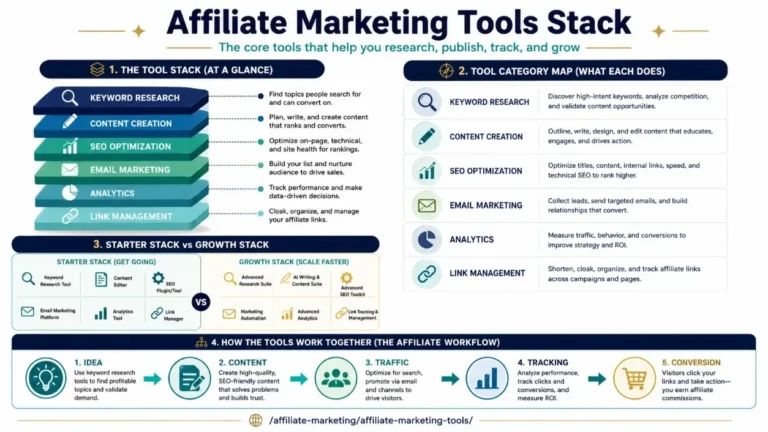
Essential Seo Tools for Affiliate Growth
To implement these 2026 strategies effectively, you need a lean stack that handles keyword research and content optimization. For deep competitor analysis and tracking your sustainable rankings, Semrush remains the industry standard. If you are focusing on content depth and semantic saturation, tools like NeuronWriter or Surfer AI can significantly speed up your workflow while maintaining the quality Google demands.
Frequently Asked Questions: Affiliate SEO
For research and ranking tracking, many experts recommend Semrush due to its comprehensive keyword and competitor analysis features.
Focus on topic authority and semantic depth using tools like NeuronWriter or Frase to ensure you cover all relevant subtopics that search engines expect.
Yes, tools like SEOWriting.ai can help scale content, but it should always be refined with original research and first-hand insights to survive Google updates.

Alexios Papaioannou is the founder and lead editor of Affiliate Marketing for Success. He focuses on affiliate marketing systems, SEO, content strategy, monetization design, and the impact of AI-driven search on publishers. Editorial background, disclosure standards, and correction policy are documented on the site’s About Alexios and Editorial Policy pages.